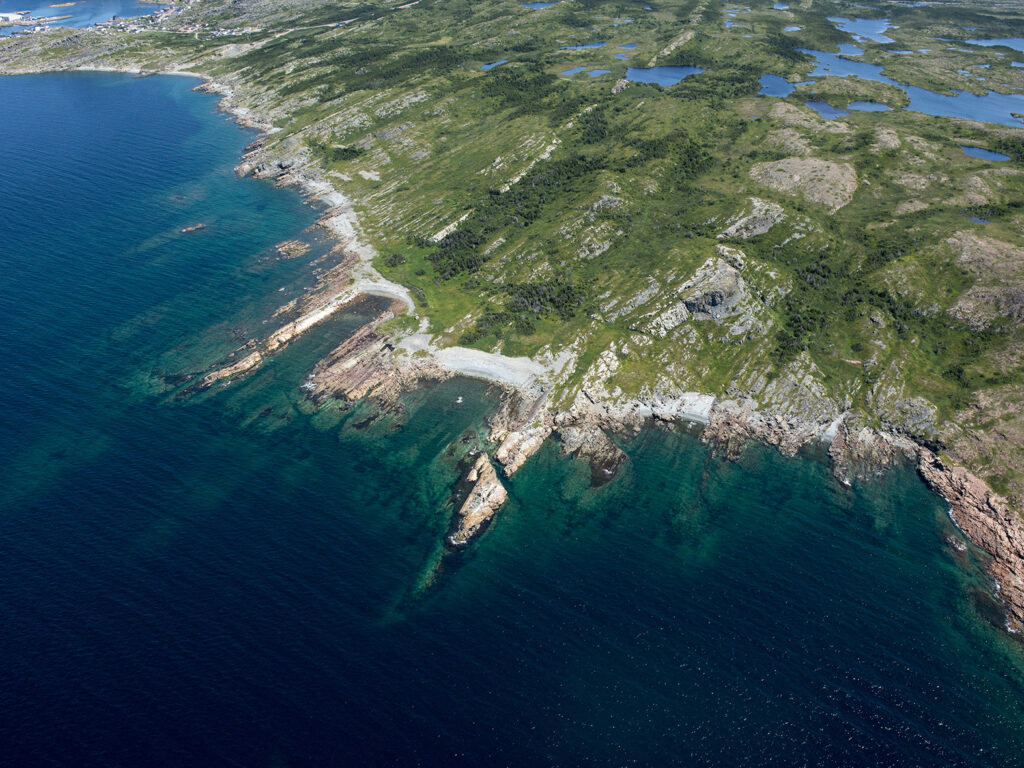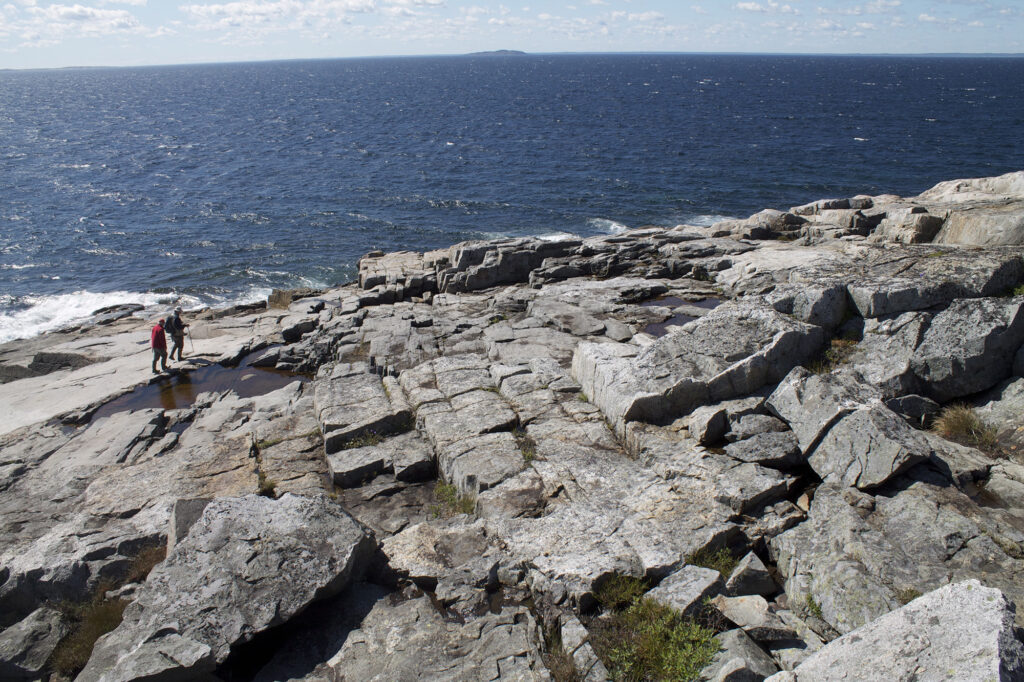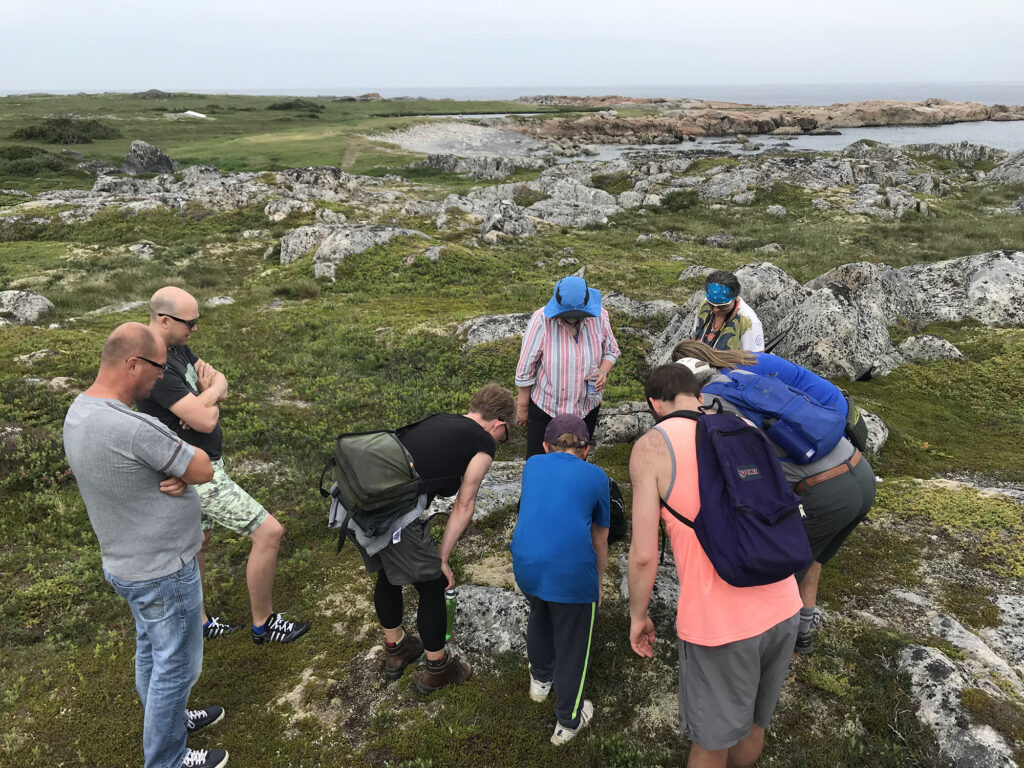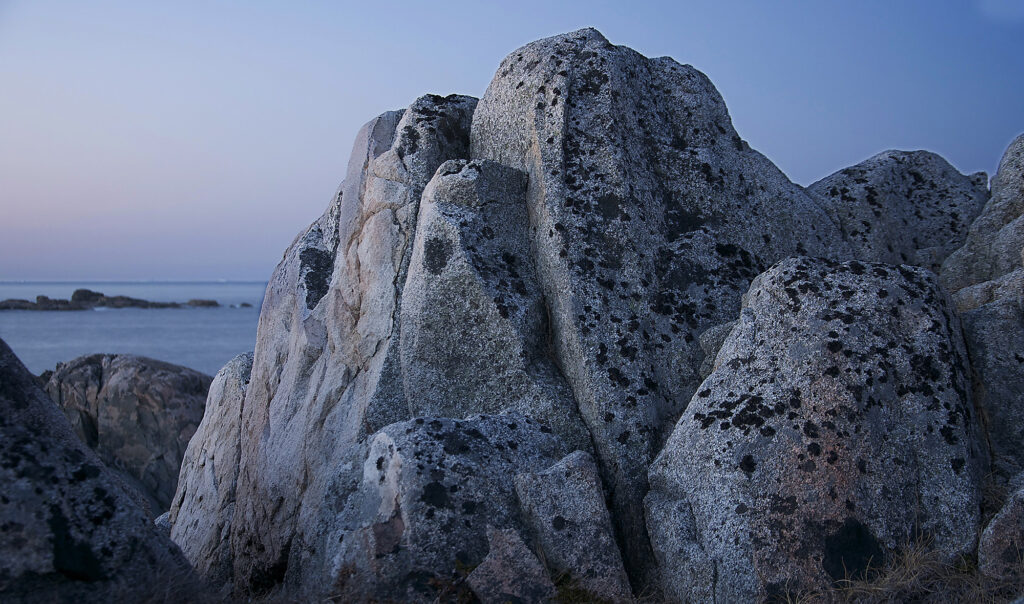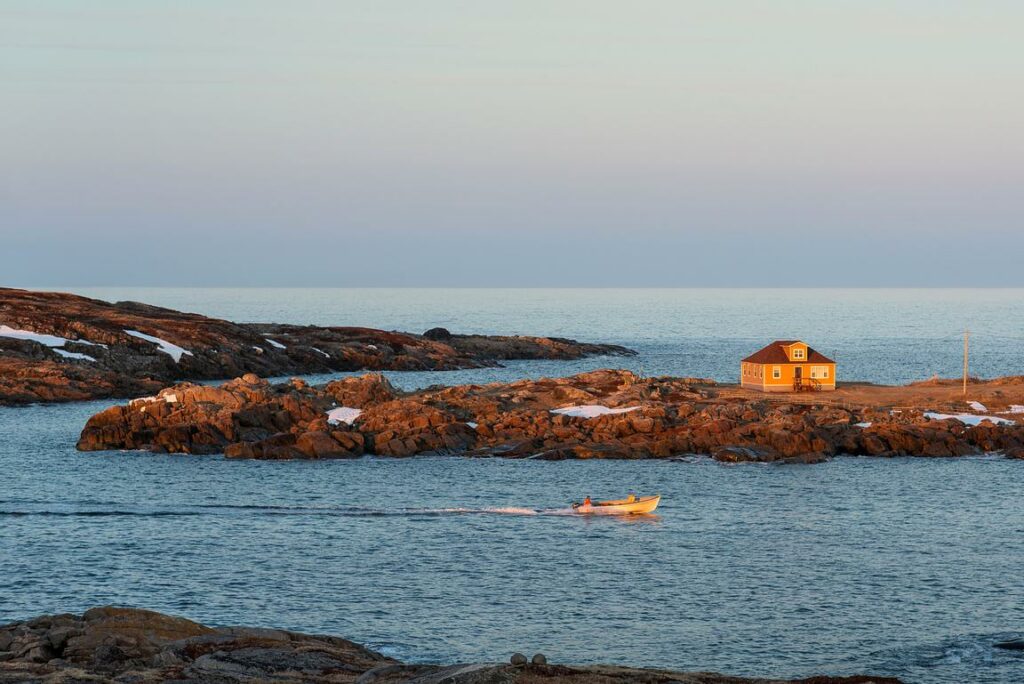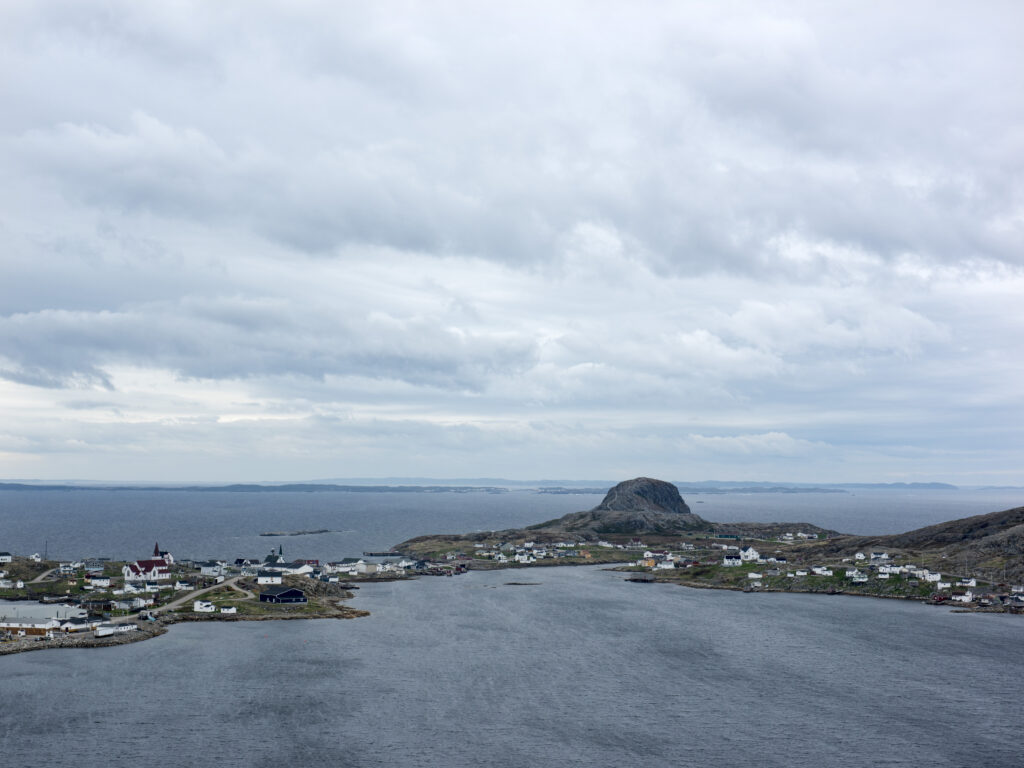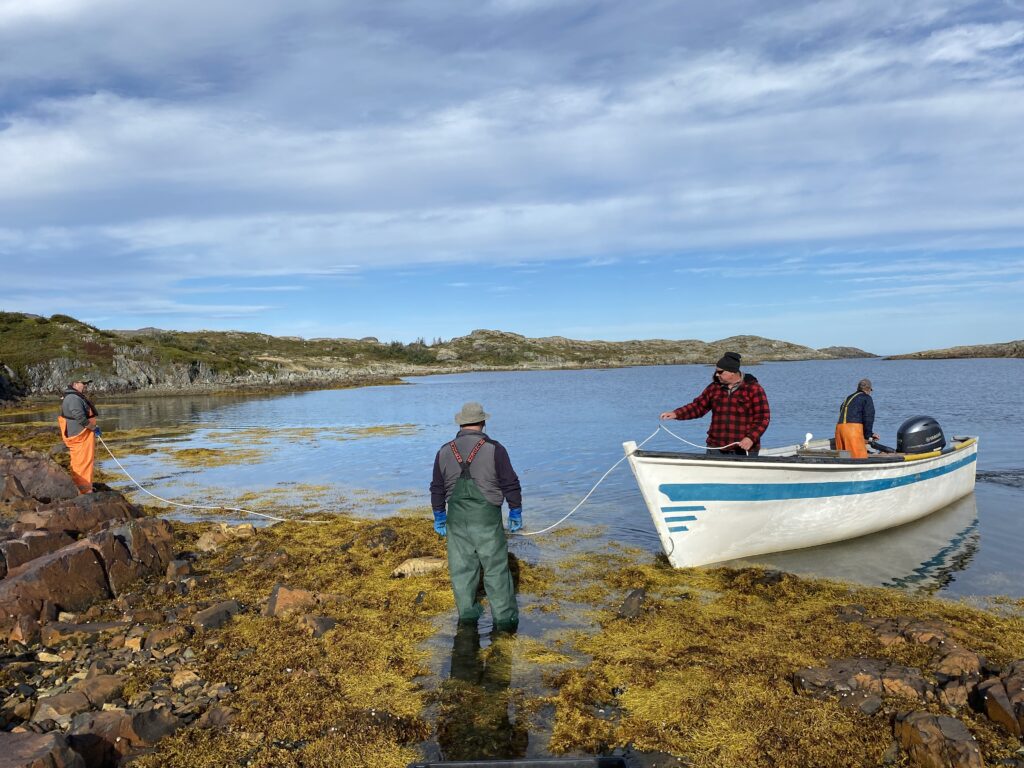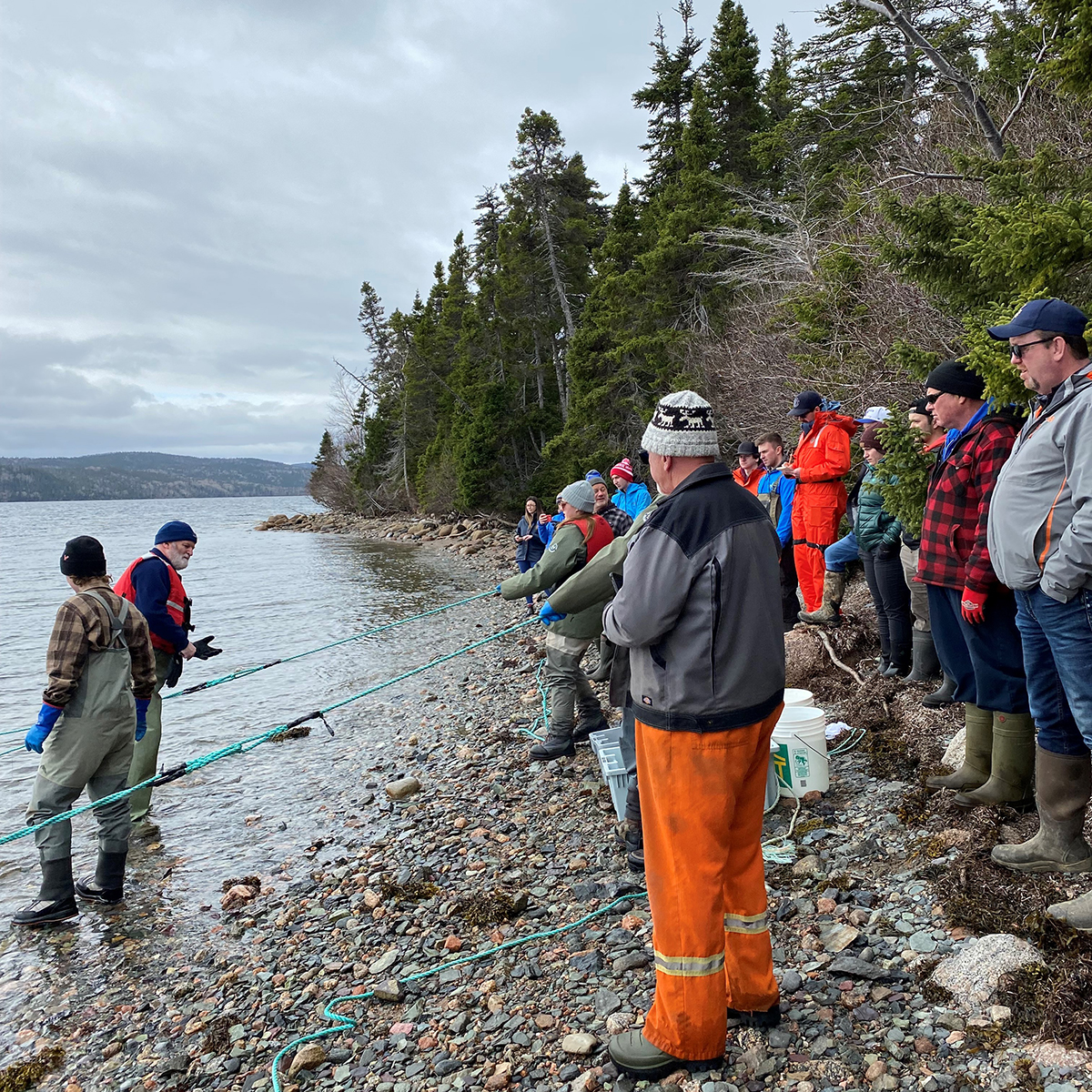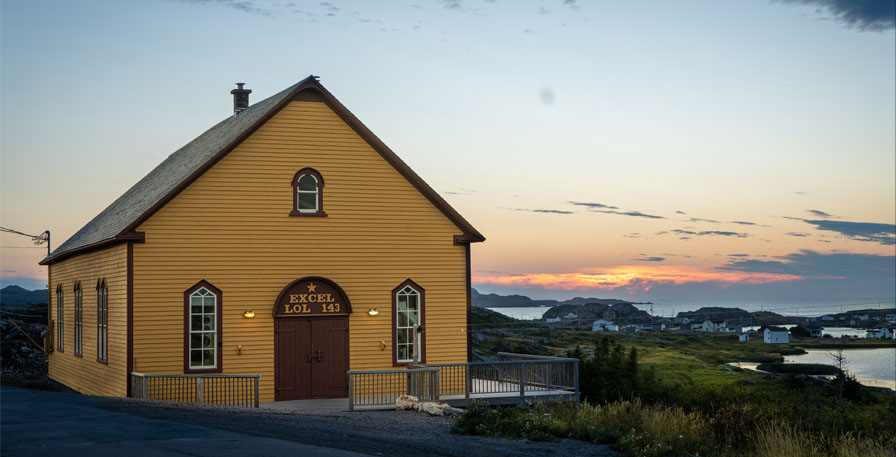
International gathering of artists, designers, and thinkers on Fogo Island, October 1–3, 2026
FOGO ISLAND, NL — March 30, 2026 — Today, Fogo Island Arts announced Shore Time: Art Design Place.
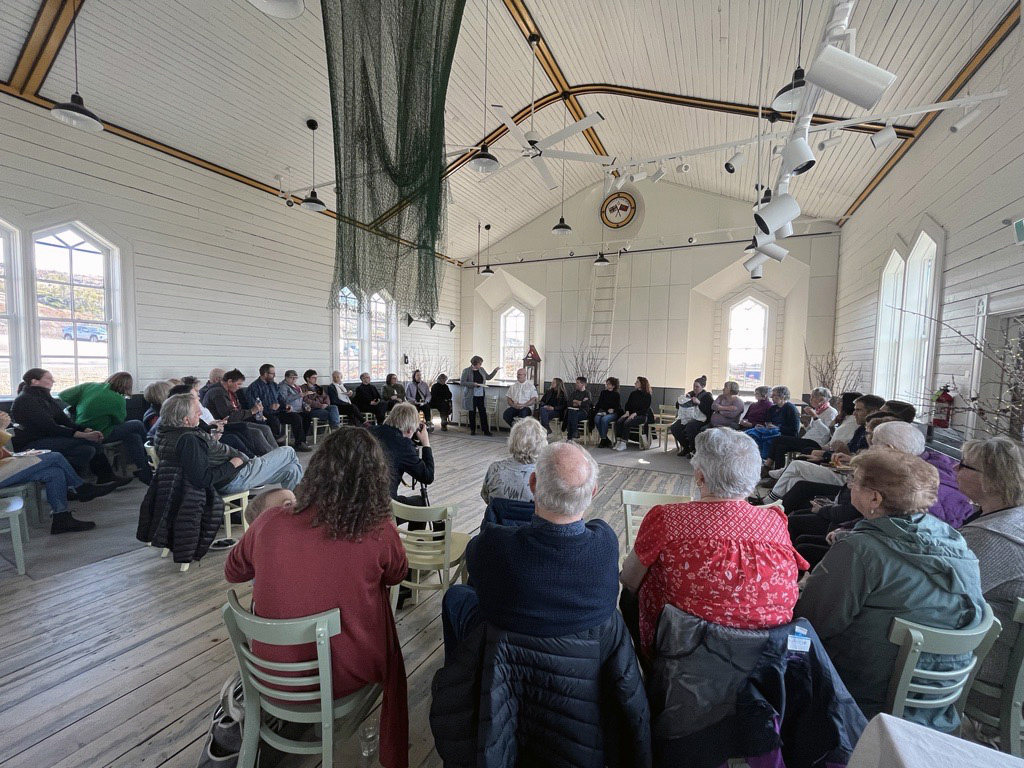
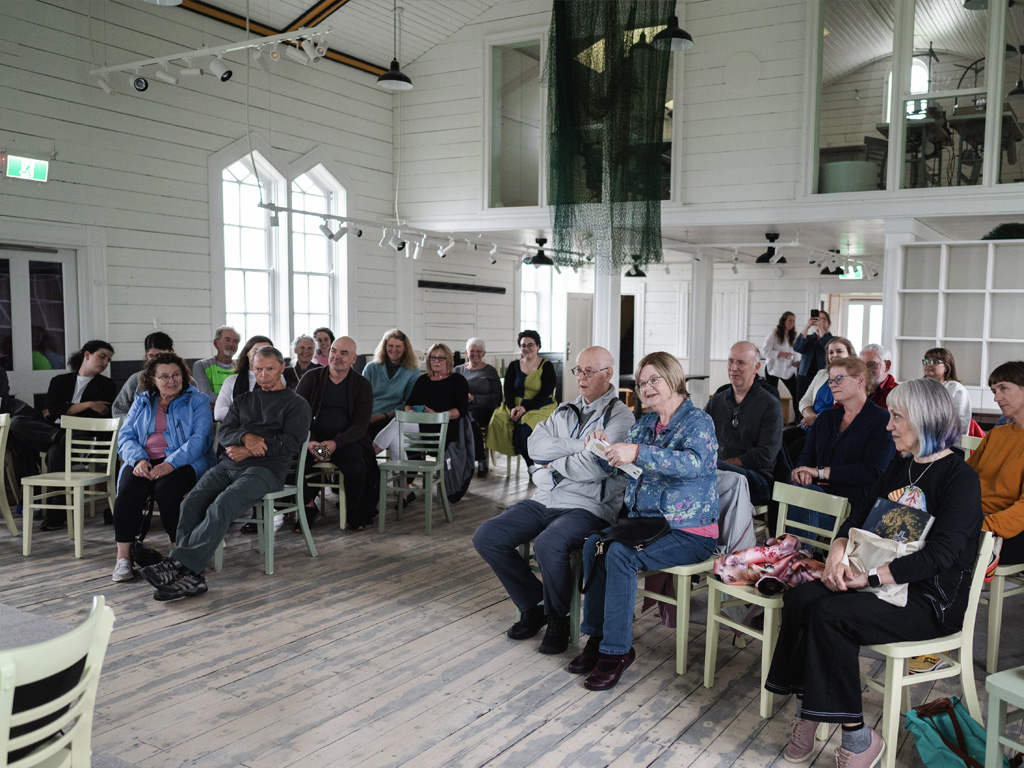
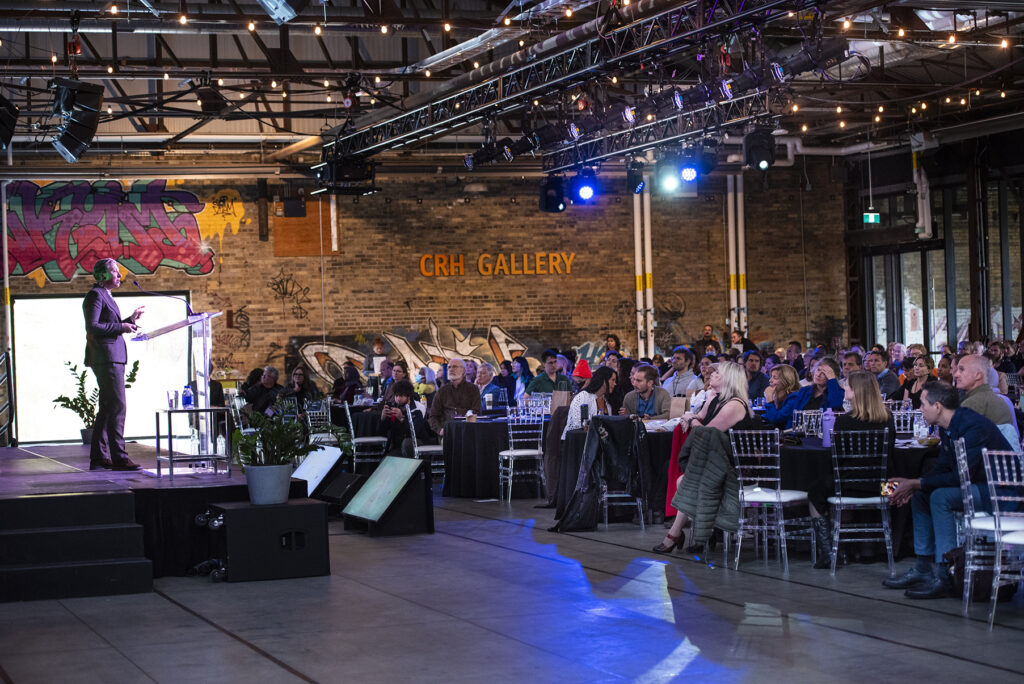
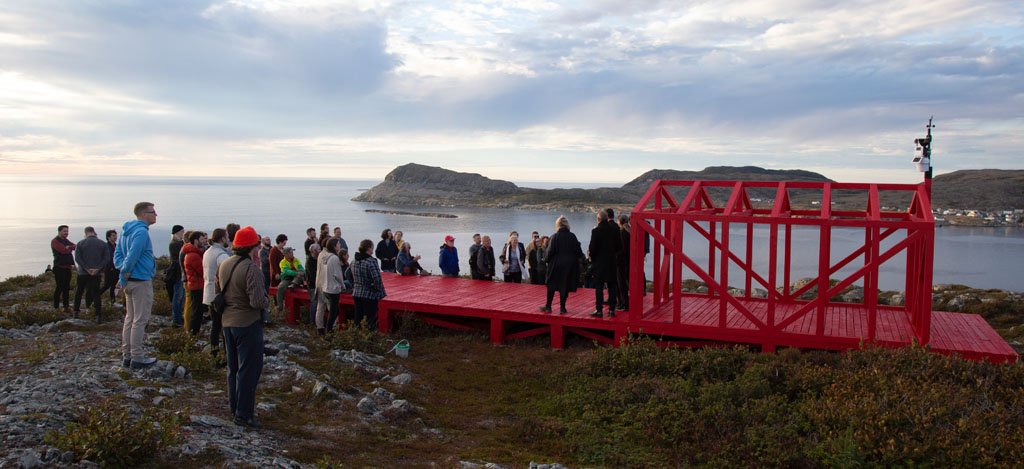
This year’s edition of the biannual gathering first held in 2024, will take place October 1–3, 2026, on Fogo Island, Newfoundland and Labrador. The event brings together artists, curators, critics, architects, and designers to explore human-centred making and the specificity of place. This year, art and design are the lenses through which the present and future will be explored.
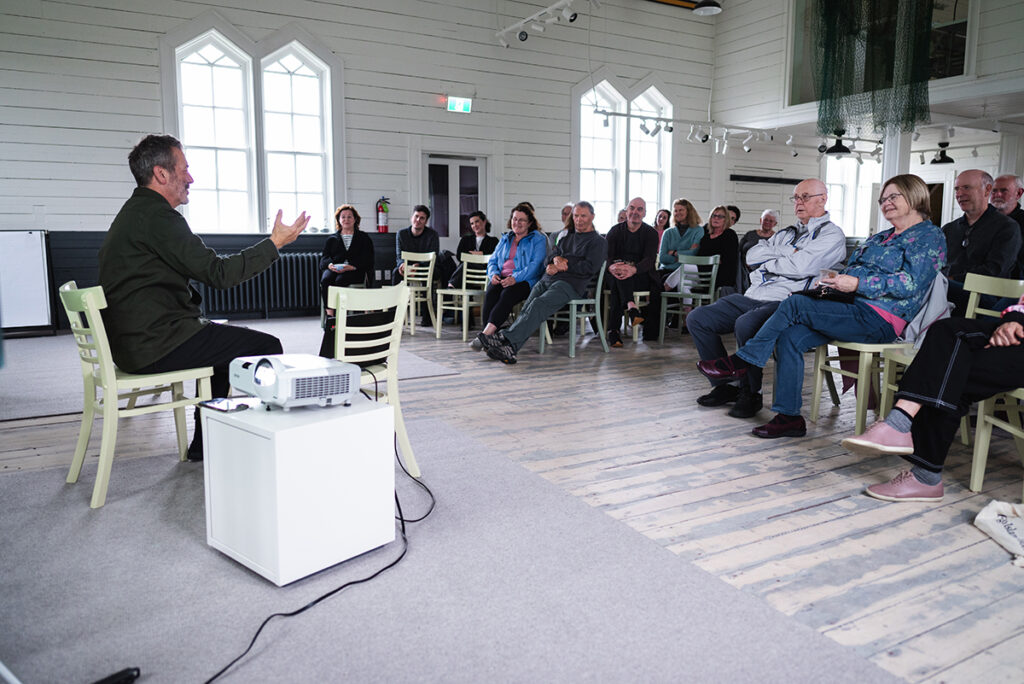
Over three days of conversation, artists and designers will share how they live, think, and make in these changing times. The communities of Fogo Island, each with their rich tradition of local makers, will provide the context that grounds these conversations in lived reality.
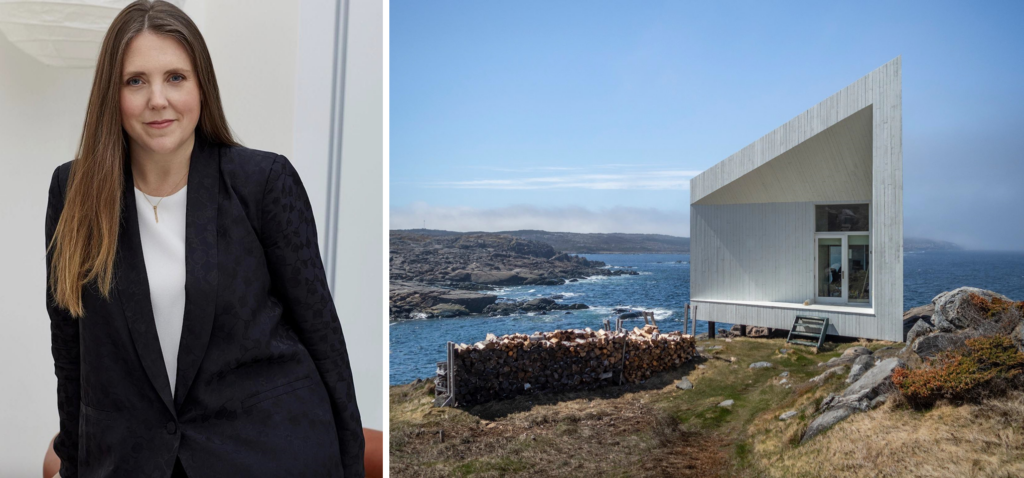
The event is organized by Kitty Scott, Strategic Director, Fogo Island Arts, Zita Cobb, Founder and CEO of Shorefast and Todd Saunders, architect of Fogo Island Inn and Fogo Island Arts studios. Co-organizers include Stephan Weishaupt, Founder of Avenue Road and Man Of Parts, and Ernst Hupel, Partner at 2H Interior Design.
“Both art and design entail more than the creation of discrete objects – they also model new entanglements of people, places and things. Fogo Island, the location of the event, is itself an argument for the recognition of the value of specific places, and communities, as well as the knowledge that lives in both.” said Kitty Scott, Strategic Director, Fogo Island Arts.
Shore Time brings together an internationally renowned group whose work spans art, design, architecture, and critical writing. Confirmed speakers include Leonor Antunes, Sebastian Herkner, Hella Jongerius, Tom McDonough, Glenn Pushelberg, R.H. Quaytman, and Tommy Smythe. Shore Time is made possible thanks to the generous support of Stephan Weishaupt, of Man Of Parts, and Andrew Grimes, of Grimes Handscomb Asset Management, RBC Dominion Securities.
Fogo Island Arts was founded in 2008 as a founding program of Shorefast, a registered Canadian charity dedicated to place-based economic development on Fogo Island and beyond. Fogo Island Arts is an international contemporary artist residency program located on Fogo Island, off the northeast coast of Newfoundland and Labrador, Canada. Founded on the belief that artists are visionaries with a unique capacity to reveal and respond to the complexities of our time, FIA has grown into a globally recognized institution encompassing residencies, exhibitions, public programs, publications, and research projects. FIA uses four off-the-grid studios designed by Newfoundland-born, Norway-based architect Todd Saunders.
Shorefast is a Canadian registered charity (#85883 0904 RR0001) forging new pathways at the intersection of economic development, business, art, and philanthropy. Its initiatives include the Fogo Island Inn, Fogo Island Arts, the Shorefast Institute for Place-Based Economies and programs focused on food systems, the environment, culture and heritage.
Through work on Fogo Island and beyond, Shorefast builds, learns and shares economic development practices that activate the intrinsic assets of communities, towards a vision of more prosperous economies that serve people, nature and culture in more places.
Venture for Canada Founder to serve as Senior Advisor, helping drive growth and capacity
TORONTO, ON – February 4, 2026 – Shorefast, a Canadian registered charity pioneering place-based economic development, today announced that Scott Stirrett would be bringing his experience to the Shorefast Institute in a Senior Advisor capacity.
As Canada looks to new approaches to strengthen its economy, the Shorefast Institute, which launched in December, is working at the ground level to advancing place-based models of economic development, towards a more durable and prosperous future.
Stirrett brings a decade of experience building a national movement for economic opportunity. He founded Venture for Canada in 2013 and created programs that have supported over 10,000 young professionals in launching businesses and careers, while raising more than $80 million to expand entrepreneurial opportunities across the country.
Beginning February 4th, Stirrett will work with the team, lending his expertise and advising on establishing the Institute as a national leader in community economic development. He will contribute to driving the Institute’s agenda across government, business and community sectors, with key areas of responsibilities including:
Building the Institute’s financial capacity through fundraising and strategic partnerships Scaling the Institute’s impact by advancing policy and advocacy initiatives Developing community finance mechanisms to support local start-ups and businesses
“Scott brings a wealth of relevant experience working with diverse stakeholders at every level. And the work of the Shorefast Institute is about building a working framework across governments, markets and communities of all sizes.” said Zita Cobb, Founder and CEO of Shorefast. “His proven track record in establishing collaborative processes and structures makes him exceptionally well-suited to advance our mission.”
“The Shorefast Institute’s vision to harness local community assets and bring regenerative prosperity to more Canadians is exactly the kind of innovative approach our country needs right now,” said Stirrett. “I’m excited to contribute to this important work.”
Prior to founding Venture for Canada, Stirrett worked at Goldman Sachs in New York City. A graduate of Georgetown University’s Walsh School of Foreign Service, he has been recognized as a TELUS LGBTQ Innovator of the Year, a Young Impact Leader by Future of Good, a Globe and Mail Changemaker, an Action Canada Fellow and an Ashoka Fellow. Growing up in Dartmouth, Nova Scotia, shaped his understanding of community and opportunity.
As a founding program of Shorefast, Fogo Island Arts (FIA) places art at the centre of our work by fostering connections between the local and the global.
In 2025, we continued to embody the concept of “holding on and reaching out” through new residencies, exhibitions, publications, and projects on Fogo Island and across the world. Here is a selection of moments from a year that demonstrated how rooting ourselves in place creates work that resonates far beyond it.
Sharon Lockhart’s WINDWARD opens on Fogo Island
After several summers spent filming here, Sharon Lockhart shared her work with the people of Fogo Island. On May 10, 2025, WINDWARD opened at the Fogo Island Gallery, where many generations gathered to experience the film installation, unveiling the island’s striking geological formations, unique climate, and austere beauty, brought to life through portrayals of youth.
“It’s not nostalgia or romanticization but, a reminder that human life once felt slower, more spatially aware, and embedded in places. WINDWARD becomes a study of how people inhabit land rather than extract from it and how nature sets the terms of existence rather than serving as a resource or a forgotten part of our existence.”
Sharon immersed herself in the island’s communities; through WINDWARD, she commands a similar commitment from the viewer. In Lynn’s words: “…Windward asks the viewer to slow down and to experience time the way the winds and waves do, and also to observe how humans used to live in slower, less technologically addictive times.”
Two new residencies knit tradition to the global art world
This year, Fogo Island Arts launched two new residences: the Residency for Emerging French Artists and the Newfoundland and Labrador Artist Residency.
The inaugural French artist-in-residence, Maxime Cavajani, spent two months on Fogo Island, forging relationships throughout the communities. Maxime integrated fragments of our heritage into their work, inspired by the specificity of this place. The artist learned about a red paint, hand-made using red ochre and cod liver oil, that colours many of the island’s fishing stages and sheds. This Fogo Island red, in all its variations informed the works developed during their residency and exhibited at the 15th Shanghai Biennale, where Maxime is among the 67 participating artists from all around the world. Lillian Dwyer and Millicent Dwyer, from the Winds and Waves Artisan’s Guild of Tilting, contributed to one of these pieces, which borrows from the island’s craft tradition of rug hooking.
The second emerging French artist–in-residence was Alexia Trawinski, based in Strasbourg. Alexia’s practise is centred on gestural drawing, painting, and architecture, and often involves natural materials, connecting her work to place. While in residence, she and fellow artists-in-residence organized an event,In Progress, to showcase the work they made while on Fogo Island.
A common thread connects Maxime Cavajani’s time on Fogo Island to Ashley Hemmings, the first recipient of the Newfoundland and Labrador Artist Residency. Based in St. John’s, Ashley draws on their family history and playful narratives to create hand-stitched quilts and hooked rugs.
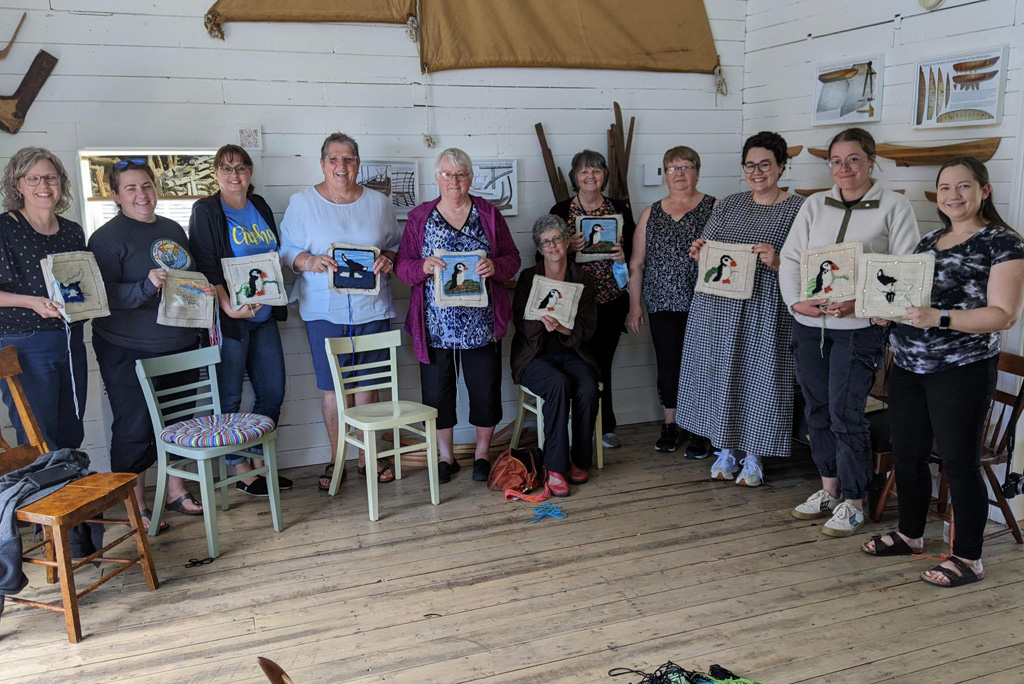
During their residency, they joined the weekly rug hooking group, led by Joyce Coffin and organized by Shorefast at the Community + Business Hub, where Ashley completed a rug for the 30th Anniversary of the Rug Hooking Guild of Newfoundland and Labrador. The event gathered 150 rug hookers on Fogo Island to celebrate the guild, which started on Change Islands three decades ago. Ashley’s piece was inspired by the ferry terminal in Farewell, where every journey to Fogo Island begins.
Local foodways meet contemporary interpretations
Fogo Island’s foodways—the ways food intersect with our culture—are singular to this place; they’re essential to our identity and heritage. Through the Labrador Current Foodways Residency, artists collaborate with Fogo Island Inn’s Executive Chef Timothy Charles to incorporate traditional ingredients and culinary practices in their work.
At the end of her stay on Fogo Island, Labrador Current Foodways resident Taus Makhacheva worked with the Inn’s culinary team to present Wobbling the Table, a Performative Dinner. Gathering artists and community members around a communal table, the experiential feast began with a Primordial Soup and ended with Eating the Imaginary, among 8 courses designed to nourish memory and the mind, as well as taste buds.
Fellow Foodways artist-in-residence Maria Simmons’ project shared a temporal nature; she makes art that eats itself. On Fogo Island, she developed a series of fermentations using bog berries. She also made “bog butter,” inspired by the ancient European tradition of preserving butter in wooden boxes that are buried in peat bogs. The artist buried four bog butters—one near each of Fogo Island Arts’ studios—to be unearthed in a year. Before leaving the island, Maria invited community members to the Punt Premises to sample her art, created with what can be found and foraged on Fogo Island.
Curators convene on Fogo Island
Part of the work of the Shorefast Institute for Place-Based Economies involves immersive convenings that facilitate peer learning. This November, Fogo Sessions invited 22 American and Canadian curators to Fogo Island to discuss the current state of the curatorial profession. The convening created a network and facilitated conversations that will continue to resonate and unfold. The guests gathered for a series of conversations, interspersed with excursions to Fogo Island’s cultural landmarks, as well as Fogo Island Workshops, Winds and Waves Artisans’ Guild, and the J.K. Contemporary art gallery.
Fogo Island Arts alumni expand their reach
Through Fogo Island Arts’ international residency program, we have created a global network of artists from a range of disciplines. Their stories continue to be intertwined with our own long after they leave our shores.
The 2025 Bonavista Biennale featured two former artists-in-residence: Brian Amadi and Ethan Murphy. While on Fogo Island, Brian created Speech that Traps, a series of textile sculptures exploring the power of words to filter, skew, and determine how we relate to other people. Ethan showcased a series of photographs, many taken on Fogo Island. The artist’s story on ferry-reliant islands in Newfoundland appeared in The Globe and Mail, bringing national attention to the lives of people in outport communities.
The works of two more FIA alumni, Abbas Akhavan and Lisa Oppenheim, were featured in the 15th Shanghai Biennale, along with Sharon and Maxime. Abbas will also represent Canada at the 61st edition of the Venice Biennale in 2026.
Nelson White was longlisted for the 2025 Sobey Art Award. He also published Mimajimk (Living/Vivre), a celebration of Indigenous kinship, beauty, and resilience.
In the fall, FIA and Sternberg Press, in collaboration with the National Gallery of Canada, published A Variability Quantifier, focusing on Liam Gillick’s weather station. The two documentary films made about the work (Variability Quantified and Quantified Variability) are documented in the book and accompanied byan interview between Liam Gillick and art historian Tom McDonough.
Looking forward to 2026
We are now accepting applications for the 2026 Newfoundland and Labrador Artist Residency and the 2026 Residency for Emerging French Artists and Curators. For details and how to apply: Open Calls – Fogo Island Arts.
Join us for Shore Time: Art, Design, Place on Fogo Island, October 1–3, 2026, as we consider the role of aesthetics, materials, and geography in response to the challenges of our time. Shore Time fosters meaningful exchanges, extending the island’s reach to the world and welcoming the world to our shores. Together, on an island off an island, we gather to reaffirm our connections to one another and build a vision of our shared future.
Support Fogo Island Arts
Fogo Island Arts seeks partnerships with organizations and donors to deliver artist residencies, publications, and strategic initiatives that respond to the needs of our time. These collaborations strengthen our ability to support artists, foster cultural exchange, and contribute to the vitality and visitor economy of Fogo Island.
If you would like to learn more about partnership and patronage opportunities, please contact Tara Janzen, Senior Director, Philanthropy and Partnerships at [email protected].
We’re grateful for the many generous supporters of our work, and to every artist who joined us on Fogo Island in 2025:
Brian Amadi, Claudia Arozqueta, Alex Blue, Maxime Cavajani, Emelie Chhangur, Christiane Keys-Statham, Ashley Hemmings, Kapwani Kiwanga, Paul Kolling, Sonia Leimer, Taus Makhacheva, Camille Richard, Maria Simmons, Sarah Stevenson, Caner Teker, Alexia Trawinski, and Kate Wong.
“Shorefast asks a powerful question: ‘How can we create an economy in service of place?’ They explore how community economies are organized, their shared challenges, and the collective strategies to overcome barriers and unlock opportunities. It reminds us of the importance of nurturing a sense of place—something we risk losing if we don’t actively cultivate it.”
— Tanya Smith, Coast Capital Savings, Victoria, British Columbia
What Happens When Economic Stewards Gather in Place ?
Through two decades of economic development practice, Shorefast has learned that coherent strategies have the best chance to emerge when practitioners come together in a physical place in pursuit of coordinated action. A key component of the work of the Shorefast Institute for Place-Based Economies involves immersive convenings that facilitate peer learning, strategy sharing, and collective problem-solving. When held on Fogo Island, we’re calling these convenings “Fogo Sessions.”
The very first Fogo Session was held in early November, designed as a four-day working session that brought together representatives from the Institute’s inaugural community cohort. This cohort represents the first members of “Shorenet”, a “network of networks” connecting places committed to stewarding the local economies that serve their communities. Fogo Session participants came from eight communities big and small across Canada: South Vancouver Island, BC; Battle River, AB; Scarborough, ON; Newmarket, ON; Prince Edward County, ON; Upper Fundy Coast & Foothills, NB; Gros Morne, NL; and Fogo Island.
A Core Challenge: Coordination Between The “Three Pillars”
To begin the inaugural Fogo Session, scene-setting included defining a shared understanding of “the economy,” followed by an overview of the “Three Pillars” concept popularized by economist Raghuram Rajan. Successful place-based development, noted Shorefast CEO Zita Cobb, requires an approach that considers and coordinates action across the pillars of community, government, and markets. Economic transformation happens at the intersection of these three forces, not in isolation.
“Real stewardship is recognizing that our roles and responsibilities within a community are ever evolving. To truly meet the needs of our communities—we must persuade markets, governments, and communities alike to place ‘place’ at the centre of every decision. Recruiting everyone into this mindset is how we accelerate meaningful change.”
— John Taylor, Mayor of the Town of Newmarket, Ontario
Despite geographic and demographic differences, participants identified common struggles present in all represented communities. These included:
Persistent silos that make it difficult to building strategic partnerships across community organizations, government entities, and private sector actors;
The affordability crisis that undermines social mobility and the labour force needed to sustain placed-based businesses;
Accessing appropriate financial capital needed for place-based investment and development
Recruiting economic actors to center place in their thinking, with better coordination between ground-up and top-down strategies when devising and implementing economic development policies and practices;
Working within the realities of local places, eg. honouring the history of communities while charting future paths and investment readiness.
The gathering coincided with the release of the Federal Budget. There wasn’t sufficient time to delve into the details of the Budget but at first blush the $51B Build Communities Strong Fund stood out as something that needed to be mapped to on-the-ground initiatives. Clearly the group see communities of place as nation building assets.
The Fogo Session discussions revealed how interconnected many of these challenges are: housing affordability affects labour availability, which constrains business growth, which limits community capacity to attract investment. Places with growing visitor economies, for example, are particularly attuned to this challenge.
Shared Challenges Across Communities
During online convenings preceding the Fogo Session and in-person on Fogo Island, participants shared unsolved challenges alongside successes to date with “community spotlight” presentations. A few examples include:
Newmarket, Ontario spoke of their impressive efforts to balance cultural development with commercial viability. They presented their Main Street revitalization project and shared forthcoming plans for blending heritage preservation with art and economic development.
Scarborough, Ontario showed how an innovative development partnership in their community is modeling how creative ownership structures can activate local economic activity and prioritize local employment.
From Victoria, BC, we heard from two community-focused organizations that are prioritizing blended finance strategies that bridge philanthropy and traditional finance.
Prince Edward County, ON, Gros Morne, NL, and Upper Fundy Coast and Foothills, NB are focused on sustainable, community-conscious tourism. Both places have prioritized the development of dedicated organizations and collaborative structures to responsibly manage tourism in their areas.
From Battle River, AB, our participants spoke with great pride about the shifts and tensions facing the prairies at this moment in Canada’s history.
In addition to hearing from the visiting communities, participants learned through immersion on Fogo Island. Mealtimes offered the opportunity to delve into the Island’s foodways, and daily afternoon outings allowed for further exploration of culture, landscape, and economy.
Visiting Shorefast’s community businesses, the cohort saw first-hand how place-based assets have become economic engines. Excursions to the Punt Premises and local craft studios showcased the singular history and traditions of Newfoundland & Labrador, underscoring the importance of the inshore fishing culture that scaffolds Shorefast’s approach.
Indeed, the importance of the past, present, and future of the Island’s fishery was continuously highlighted by the Shorefast team; after all, the charity’s community businesses and initiatives are intended to complement the Island’s co-operatively owned fishery.
Experiencing ideas in practice and hearing about the work being done by other places inspires practitioners to apply learnings to their own contexts. The team at Shorefast often invoke what is known as “Ostrom’s Law,” based on the work of Nobel-prize winning economist Elinor Ostrom: “That which is possible in practice is possible in theory.”
“This work resonated deeply with me from day one. It brought home for me the Nobel prize-winning truth: what is possible in practice is possible in theory. The principles shaping Shorefast’s community economic development model reflect what I’ve seen on the ground, blending local place-centred values with real-world impact.”
— Eoin Callan, Managing Director, Bloom Impact Capital, Prince Edward County, Ontario
Making More Things Possible in More Places: Five Potential Strategies
Discussions throughout the Fogo Session explored the realities of Canada’s current policy and business environment, potential paths toward greater alignment between ground-up initiatives, and the need for economic narratives and actions that include place-based communities in our economic planning.
Inspired by these conversations and Canada’s recent federal budget, participants brainstormed potential avenues that would support place-based economies nationwide:
Improving regional transportation as a foundational element of place-based economic development
Access to community-level data to allow placed-based planning and economic stewardship;
Accessing appropriate financial capital needed for place-based investment and development
Strengthening local procurement through tools like Shorefast’s Economic Nutrition Certification Mark;
Enabling investment capital to flow into place-based communities. This work is being led by Shorefast’s Capital Solutions Working Group (CSWG).
Incentivizing place-based entrepreneurship via accessibility to investment capital, mentorship, and policies that reward businesses rooted in, supported by and accountable to local communities.
“My biggest takeaway is that the tangible and sustainable progress begins when the Market, Government, and Community pillars meet each other with curiosity instead of competition—not asking ‘What’s in it for us?’ but seeing what becomes possible when we work in balance.”
— Alaina Lockhart, Sussex Ale Works, and Former Member of Parliament, New Brunswick
What’s Next? Building a Country: A Community of Communities
Armed with further strategies to become more effective economic innovators and stewards, communities departed the Fogo Session eager to put what they had learned into practice. . The first Shorenet cohort expressed a commitment to a “community of communities” approach to Canadian economic development and to a shared belief that geography is immutable and our communities of place are unrecognized nation building assets Top-down investment coupled with ground up development is a winning formula.
The inaugural Fogo Session also shaped the Shorefast Institute’s roadmap in concrete ways. Participants identified critical gaps in Canada’s economic development policy ecosystem, and were able to “vote” for knowledge areas they most wanted to see resources developed towards in a group design session as part of the gathering.
Significantly, participants emphasized the need for both digital learning platform and face-to-face convenings. They requested peer-to-peer matching between communities, accessible skills databases, shared project visibility, and small-group sessions with clear agendas and concrete outcomes. These insights are directly informing how the Institute will structure Shorenet’s learning platform and future Fogo Sessions.
Rural communities, like Fogo Island, often lack information that is specific to their place. Scientific research is conducted by experts in their field who are not embedded in the intricacies or exceptions of a specific location.
The truth is that nobody knows a place like the people who live there. This is the simple idea that lies at the root of community science, which fosters a more grassroots approach to scientific research. By connecting community members to relevant research projects, it leverages local knowledge, skills, and experiences to reach community-centred solutions.
Through our community science initiatives, we aim to enrich the information available on Fogo Island’s environment. We provide community members the training and tools needed to collect and share data that can make a real difference in preserving our natural world.
One of these initiatives is the green crab monitoring program, launched in 2024 with the help of Kiley Best of the Marine Institute, the Department of Fisheries and Oceans Canada (DFO), and dedicated community members.
The Invasive Green Crab: Why Does it Matter?
Green crab is an invasive species that is native to Europe and North Africa. It started appearing around the Atlantic shores of Canada in the 1950s, making its way to Newfoundland in 2007.
Its negative impact on our ecosystem is both ecological and socio-economic — ecological, because it damages marine habitats and feeds on native animals, and socio-economic, because it can potentially disrupt our fishing industry through aggressive behaviour towards species essential to the fishery, like lobsters and juvenile finfish.
Considering this impact, it’s essential to limit their spread in order to protect the future of Fogo Island’s environment and economy.
From Awareness to Active Removal on Fogo Island
Our monitoring program on Fogo Island began almost as a fluke. In early 2024, Fisheries Biologist Kiley Best of the Marine Institute led a presentation on green crab on the island for community members, fishers, and representatives of the Fogo Island Co-op. The purpose of the presentation was to raise awareness and share knowledge on the invasive species. While green crab had been identified in other parts of Newfoundland, it had never been spotted in the waters around Fogo Island.
After that presentation, Kiley suggested green crab monitoring as a community science program to our Environmental Stewardship team. The expectation was far from finding green crab, but rather to engage and educate community members on the practices and tools required to trap invasive species. The program’s main goal would be awareness.
In summer of 2024, our team launched the program with a handful of volunteers in different communities. We provided each volunteer with Fukui traps (multi-species traps from Japan), rope, bait, a log book, and an experimental license issued by DFO. No green crabs were found, but the program proved a successful way to engage Fogo Islanders in community science.
Everything changed in the fall of that year when fisher Kevin Ford trapped around 27 green crabs in the community of Island Harbour. Around the same time, green crab was also detected near Twillingate and around Change Islands. The teenager from Change Islands who found the crab, Brody King, was even named Newfoundland and Labrador’s first Ocean Hero of the Year by the World Oceans Day committee.
This changed the purpose of our program from awareness to prevention and active removal. It also led DFO to declare Fogo Island, and the wider Notre Dame Bay area, as an area of interest for green crab. In 2025, we maintained a small pool of volunteers throughout different communities. While the team remained small, their activities grew exponentially with hundreds of green crabs being trapped over the summer. Some of the volunteers are children from the community who are excited to check their traps every day, eager to share their learnings with their classmates and neighbours.
One of the island’s most prolific volunteers is Janet Facey, a teacher at Fogo Island Central Academy. Janet joined the program as a fun summer activity for her to do with her kids (aged 7 and 11).
“I’m the green crab lady,” she laughs while pulling out green crabs from a trap set near the canal in the community of Fogo, where she lives, “I’m a little bit obsessed. It’s exciting to track how many you get.”
Janet has trapped almost 900 green crabs, mostly from the same spot in Fogo. “Once we started catching them, we tried being strategic about it and trying different areas to find hotspots,” she says.
Beyond being an immersive way of teaching her kids about the ocean, Janet explains that it has allowed her to engage with many community members who are curious about what she’s trapping. She always explains to them what green crab is and why it matters, adding that it’s helped raise awareness and interest in green crab monitoring. Since she traps near a vacation rental, it’s also drawn the curiosity of tourists and visitors to the island.
An Ongoing Initiative
Shorefast’s green crab monitoring program is a testament to the power of community science. The dedication of our volunteers shows the love and care Fogo Islanders bear for their environment. The program places them at the forefront of our preservation initiatives and relies on their time, skills, and knowledge to protect our ecosystem from this invasive species, which would never have been discovered if it wasn’t for our community members.
As the program evolves, we’re working with DFO to explore its potential expansion. We hosted the Indian Bay Ecosystem Corporation (IBEC) for a workshop to deepen our knowledge of green crab monitoring. IBEC is conducting research on the green crab in various parts of Notre Dame Bay. Their project is fully funded by DFO as a response to an increase in green crab found in eastern and north-eastern Newfoundland. Currently, our removal plans for the green crabs include turning the trapped species into compost that community members can use for their gardens.
We’re grateful to our volunteers, the Marine Institute, and the DFO for our ongoing partnerships.
Through our Heritage Preservation initiatives, Shorefast is devoted to conserving the traditions that tie people to place. Beyond restoring historic homes and churches, these initiatives carry forward our heritage by sharing the knowledge that once inhabited these buildings.
Located in the community of Joe Batt’s Arm, the Punt Premises sets a perfect example. There, the legacy of the inshore fishery lives through a collection of historical and cultural assets shared by experienced Community Hosts and our Punt Master PJ Decker.
Courtesy of Tom Cochrane
Preserving boatbuilding on Fogo Island
At the heart of the Punt Premises drifts the mighty punt, the former workhorse of the fishery. Building these small wooden boats was once essential to surviving on Fogo Island. Today, with most wooden boats gone from our waters, so are the skills and expertise required for boatbuilding, a craft that helped build our community. Only a handful of wooden boatbuilders remain on Fogo Island and Change Islands.
To ensure this knowledge is preserved on Fogo Island, PJ recently completed a week-long boatbuilding workshop at the Wooden Boat Museum of Newfoundland and Labrador in Winterton. Led by the museum’s master builder, Jerome Canning, the course focused on the construction of a Winterton Rodney, a wooden punt typical of the area.
Gushing about the experience, PJ explained: “It’s not about survival or making a living anymore. It’s about the beauty of the tradition.”
Courtesy of Tom Cochrane
All hands on deck
During the five-day workshop, PJ learned many traditional techniques through hands-on lessons with Jerome. These included connecting the stem (the most forward part of a boat) to the keel (the structural “spine” of a boat), recording the shape for the timbers (the “ribs” of the boat), ensuring the keel was straight from stem to stern, cutting and bevelling timbers to secure in the boat, and many more building methods.
One of the most important elements of boatbuilding learned by PJ was the three-piece mould, which was crucial for designing and building the punts. The mould helped determine the size and shape of the hull. As Jerome told PJ, these “three sticks” were all our ancestor needed to make a living in Newfoundland:
“He leaves the boat from Liverpool or somewhere, with a big knife, a nickel from his mother, and a bit of this, and a bit of that, never to see England again, but what he’s got in his hands are those three sticks – boats for his family.”
These tools and techniques come together to build punts Jerome referred to as “suant,” a traditional term in Newfoundland that means symmetrical, harmonious, balanced, and beautiful. PJ adds that the punts of Fogo Island and Change Islands were always suant; he hopes what he learned will help keep them that way.
“Fogo Island punts are different than any other punts in Newfoundland. If we lose tradition, then there will never be Fogo Island punts again,” he explains.
Jerome Canning and PJ Decker in Winterton; Courtesy of PJ Decker
Building a legacy
Back at the Punt Premises, PJ is wielding the lessons learned in Winterton to enrich the heritage of the building, home to historic boatbuilding tools and models, such as the famous three-piece mould. With this acquired knowledge, our Punt Master can share the boatbuilding techniques of our ancestors with visitors and residents and keep this tradition at the heart of the stories we tell of this place. The course will also help PJ repair Shorefast’s own fleet of punts and ensure Fogo Island’s mighty wooden boats stay afloat for the next generations.
World Ocean Week serves as a powerful platform for showcasing Shorefast’s Environmental Stewardship work.
In 2025, a focus on engaging youth in hands-on learning experiences connected classroom education with real-world environmental action. In-school workshops, a shoreline clean-up, and multiple activities at the Town of Fogo Island’s World Ocean Day celebration highlighted how collaborative partnerships and place-based education can inspire a new generation of community scientists.
Photo by Tom Cochrane
Fogo Island Central Academy In-School Workshops
Exploring Plastic Pollution through Cod Dissection (Grades 7-9)
Through a partnership with the Civic Laboratory for Environmental Action Research (CLEAR), Shorefast’s team led students through an in-school cod dissection to examine the digestive tract for plastic pollution. Students learned the anatomy of a cod fish and explored how communities can participate in community science by collecting and analyzing fish guts for plastic pollution.
This hands-on activity engaged students in scientific research while deepening their understanding of plastic pollution in our oceans. It also encouraged them to interact with a familiar and important species to Fogo Island through the lens of environmental stewardship.
Water Monitoring: Freshwater vs. Seawater (Grades K-5)
Our team led three field trips for students in grades K-5 to our local pond, where they explored water quality using Water Rangers test kits. Water Rangers is an organization dedicated to equipping communities with accessible tools to monitor and care for local waterways. Students learned how to test both pond water and seawater (brought in for comparison) while discussing the differences between the two and how they are interconnected within our coastal ecosystem.
Shoreline Clean-up
Continuing our annual tradition of an internal roadside cleanup, Shorefast volunteers picked up waste and debris alongside the road and coast in Joe Batt’s Arm.
In preparation for World Ocean Week, Shorefast team members partnered with Atlantic Healthy Oceans Initiative (AHOI) in Gros Morne, NL to learn how to conduct waste audits – an important tool for identifying its source and reducing debris. Building on that knowledge, the team conducted an audit from the roadside cleanup to better understand waste on Fogo Island. The team found the top 3 contributors to the roadside cleanup were unidentified plastics, cigarettes, and food wrappers.
World Ocean Day at the Iceberg Arena
To launch our community science monitoring program for detecting green crab in our area, Shorefast hosted a booth to inform the community on the invasive species. The booth included underwater GoPro footage of a green crab, a recently caught green crab, an identifying game, and a sign-up list for interested volunteers.
Shorefast also invited CLEAR to take part in World Ocean Day celebrations. CLEAR focuses on addressing plastic pollution through community-engaged science. At the arena event, the lab shared its community science projects, demonstrating how the public can be involved in tackling plastic waste. CLEAR also presented research related to Fogo Island, highlighting the importance of local data collection.
In partnership with Kalup, a seaweed nursery startup from Change Islands, Shorefast hosted an interactive seaweed farming booth showcasing the full cultivation process, from nursery stages in a seawater lab to outplanting at the seaweed plot and drying techniques used after harvest. The booth highlighted our growing collaboration with Kalup and shared recent progress of our Seaweed Pilot Project, offering insight into sustainable seaweed farming in Newfoundland.
To further generate interest in the project, Fogo Island Inn and Growlers created kelp ice cream using seaweed harvested from the plot off the coast of Fogo Island. The treat sparked conversation on how local produce can be incorporated into our food, and every available scoop was served.
To encourage creative connections with seaweed, Fogo Island Arts hosted a sun printing booth using a cyanotype process. Participants created prints using locally foraged dried seaweed, learning about different seaweed varieties while designing ocean-inspired artwork to take home.
On May 28, 2025, Fogo Island Inn’s Executive Chef Tim Charles led a growers’ circle at The Storehouse, where Restaurant Pearl Morissette’s culinary team, the growers of Farm on Forest, and visitors and residents of Fogo Island gathered for a conversation around what connects us all: good food.
Restaurant Pearl Morissette’s Co-Executive Chef Daniel Hadida kick-started the discussion by introducing the Ontario-based, MICHELIN-starred restaurant’s approach to regenerative farming. “We’re a terminus for regenerative practices that includes growers, fishers, and foragers. We represent the public part of that circle.”
Also present was the restaurant’s resident grower, Shane Harper, who calls himself a “Chef de Farm”. Shane described how his garden serves as another station in the kitchen staffed by “chef-trained gardeners” who focus on cultivating the often-esoteric ingredients featured in the restaurant’s dishes.
Photo by Anja Sajovic
Daniel acknowledged the particularities and privileges of a restaurant surrounded by very nutrient-rich soil — Restaurant Pearl Morissette is located in Ontario’s fertile wine country. In a garden only 300 feet away from the restaurant, the team grows 300 crops. While the conditions appear more arduous in Newfoundland, Farm on Forest’s Tavish Russell and Anja Sajovic drew parallels between their work and Restaurant Pearl Morissette’s.
Tavish and Anja moved to Newfoundland in 2012 (him from Saskatchewan, her from Slovenia). Struck by the island’s food insecurity and poor quality of imported produce, the duo slowly transformed their home in St. John’s into an urban homestead that could provide high-quality ingredients. Thanks to a lot of experimentation, they now grow around 200-250 crops and supply many chefs, including Chef Tim at Fogo Island Inn.
“There is a perception that you can only grow five or six crops here,” said Tavish, “We find inspiration in finding more crops that can grow. The exciting thing about growing in Newfoundland is that there is so much opportunity. There was a strong culture of agriculture, and it died off for a period of time, but it’s starting to come back in these small holdings.”
Photo by Steffen Jagenburg
Anja attributes this return to the influence of restaurants. “Restaurants play a huge role in educating communities on new tastes and new ingredients. If one grower starts growing kale, then shows his neighbour, that’s how you get the ball rolling.”
This influence is clear on Fogo Island, where Chef Tim and his team have helped introduce crops like kale and fennel to the gardens of local growers who supply the Inn, including Alfred Coffin. Alf was one of the Fogo Island growers who joined the circle, along with Winston Osmond, Al Dwyer, Allan Foley, Neal Buffett, and Alf’s granddaughter, Keiona Brown.
Fogo Islanders have been growing their own food since long before regenerative farming was adopted by forward-thinking restaurants and chefs. “Ever since I was strong enough to hold a shovel, I’ve been cultivating the land,” said Al. “I’ve grown everything,” added Winston, “Every seed I could get my hands on.” He shared that they might not benefit from acres of land, like in Ontario or elsewhere, but that there are quarter acres and sheltered areas between rocks. It takes creativity to grow here, and a stubborn streak, and, according to Keiona, a dash of competitiveness.
“A lot of older people are stuck in their ways,” she said, “My pop said you can’t grow carrots. There was a bit of competition in showing him that you can. If there’s a will, there’s a way. It’s all about mixing the old with the new.”
Tavish echoed that sentiment. “There is so much to learn from the old ways of growing crops, but now we also have access to information on how people grow things around the world.”
Photo by Anja Sajovic
While the growers’ circle celebrated the progressive impact on growers of culinary destinations like Restaurant Pearl Morissette and Fogo Island Inn, it also showcased the lessons still being learned from our traditional foodways. Daniel and Shane listened intently as Fogo Island’s growers discussed spraying their crops with seawater, which infuses produce with natural salinity. Alf and Winston also explained how they’ve not only used sea plants and kelp to fertilize the soil, but capelin and lobster shells.
Conversations around foodways between growers from here and away highlight the necessity of a healthy food system. Nourished by locally grown ingredients, a healthy community contributes to the health of the environment and of the economy. These conversations are also crucial to inspire the next generation of growers, like Keiona Brown, who learned from her grandfather and hopes to continue the traditions of growing on Fogo Island.
An important part of Shorefast’s work under the banner of Environmental Stewardship is to find new ways to create economic opportunity for our community while relying on the inherent knowledge and geographic assets already in place.
Growing seaweed is at the core of our current environmental initiatives — it can lead to economic and environmental benefits for Fogo Island.
Seaweed Pilot Project: Planting Seeds
Through our Seaweed Pilot Project, Shorefast is leading research and development towards the establishment of seaweed cultivation around Fogo Island. Successful seaweed cultivation in our waters could diversify the local economy and lower the barrier of entry into this form of aquaculture for the fish harvesters of Fogo Island.
Led by our Environmental Stewardship team, the project is currently a collaboration with the Fogo Island Co-operative Society and Kalup, a start-up on Change Islands and the first independent seaweed nursery to produce seeds in Newfoundland. Kalup is operated by Varrick Grimes and his business partners, Robbin Cheesman and David Woodrow. Originally from Lewisporte, Newfoundland, Varrick’s extensive experience in theatre has brought him around the world, from France and the UK to Kenya and Thailand. Reading Eat Like a Fish by Bren Smith inspired Varrick to change career and try his hand at ocean farming. In 2024, he set up Kalup inside the Change Islands’ fish processing plant, where he grows kelp spores with the support of the community.
The Seaweed Pilot Project was developed with Marine Institute (MI) at Memorial University of Newfoundland and originally funded by the Canadian Centre for Fisheries Innovation (CCFI). In 2024, the team enjoyed their first successful seaweed harvest, an accomplishment made possible by the many Fogo Island fishers and community members who provided their expertise and guidance.
Looking to more sustainable ways of farming
On Fogo Island, seaweed has always been used as garden fertilizer. Local gardeners will collect seaweed from Fogo Island’s beaches and lay thick layers atop of the soil.
Seaweed farming is one of the most sustainable forms of aquaculture. Seaweed can be used as biofuel, fertilizer, and animal feed. As a nutrient-packed ingredient, it can even be served in healthy, plant-based dishes. Most importantly, seaweed can be crucial to preserving the ocean that is essential to the livelihood of many Fogo Islanders. It promotes healthy oceans by:
absorbing carbon
improving water quality
combatting ocean acidification
creating habitats for marine life
Year-Round Farming
Farming seaweed is a year-round endeavour; our team braves rain, shine, or snow to maintain our crop.
The wild harvest begins in early fall when we find mature seaweed to use for a nursery. The nursery — an indoor saltwater lab facility — extracts spores from seaweed to grow more plants. Only a few blades are needed to produce up to 40,000 blades of farmed seaweed. Young seaweed seeds grow in the nursery for 4 to 7 weeks.
In late fall, we “seed” our lines. The seeds grow on a thin line in the nursery where they are monitored for ideal growing conditions (light, temperature and nutrients). Once the spores grow into small seaweed plants ready, we take that line and wrap it around our larger deployment line located in our seaweed plot off the coast of Fogo Island. These small plants are left in the water to grow through winter.
Farming continues in colder climate. Year-round, our Environmental Stewardship team tests the waters around our seaweed growing area to ensure conditions are right for happy and healthy seaweed. We regularly check water temperature, dissolved oxygen, and salinity — all of which have an impact on aquatic life. We also ensure our gear stays in place through winter storms and turbulent waters.
Our main growing season runs from early spring to July. That’s when we start measuring growth and monitoring how quickly the seaweed is maturing.
July is a very exciting time: harvest time! If it’s successful, we spend July to August maintaining the plot for the next growing season until we can extract mature seaweed from our local environment and start all over again.
The future of seaweed on Fogo Island & beyond
Through our investment in research and development, we continue to explore and expand on the uses for farmed seaweed beyond its traditional applications. This exploration relies on collaboration, such as our research partnership with Dr. Christina Smeaton at Memorial University, Grenfell Campus. Dr. Smeaton studies the reduction of carbon footprints in agriculture by using seaweed-based fertilizers.
For more information and updates on our Seaweed Pilot Project, follow us on Instagram and Facebook or contact our Environmental Stewardship team at [email protected]
Across two decades, Shorefast has developed and tested initiatives on Fogo Island that, alongside our fishery, continue to prove it is possible for small places to thrive in the global economy.
By harnessing local knowledge and reaching out into the broader world to learn from others, we have built internationally recognized community businesses and delivered public programming at the forefront of global thought leadership. As a whole, our work demonstrates the power of tethering financial capital to place.
Today, we’re proud to share our 2023/2024 Impact Report, a testament to the potential of place-based approaches to economic development.